
Menu
Others
Watch Out for Dengue Fever! Implement the "Inspect, Dump, Clean, and Scrub" Measures
The Taiwan Centers for Disease Control (hereinafter referred to as the CDC) announced today (August 5) that recent heavy rainfall has led to flooding and standing water in many areas. During post-flood home cleanup, the public is at increased risk of contracting infectious diseases such as leptospirosis, melioidosis, enteric infections, and dengue fever due to contact with sewage, sludge, or mosquito-breeding stagnant water. The CDC urges the public to follow the three key disease prevention steps—"Be properly equipped, eat safely, and eliminate breeding sources"—to stay protected from infectious diseases.
The CDC reported that during the past week (July 29 to August 4), three new local cases of melioidosis were confirmed, all of which occurred after Typhoon Danas. The cases involved residents of Kaohsiung City (2 cases) and Taichung City (1 case), aged between their 50s and 60s, with onset dates ranging from July 21 to July 30. So far this year, Taiwan has reported 35 local melioidosis cases, including 2 deaths, making it the third-highest number for the same period on record, after 2005 and 2024 (both with 48 cases). The majority of cases occurred among people aged 65 and above (22 cases) and 50-64 years old (11 cases). Kaohsiung City (27 cases) had the highest number of cases, followed by Taichung City (5 cases), Tainan City (2 cases), and Pingtung County (1 case). Thirteen cases occurred after Typhoon Danas, primarily in Kaohsiung (11 cases), Tainan (1 case), and Taichung (1 case).
Additionally, as of August 4, there have been 19 local cases of leptospirosis, which is lower than the five-year average for the same period. Four of these cases occurred after Typhoon Danas and were reported in Taichung City (3 cases) and Hualien County (1 case). The patients were aged between their 40s and 70s, with onset dates between July 12 and July 22.
The CDC emphasized that strong winds and heavy rains can expose soil-borne and waterborne pathogens, increasing the risk of both contact and inhalation-based infections. People cleaning their homes are advised to wear waterproof gloves, rubber boots, and face masks to avoid inhaling contaminated dust or water droplets. Those at high risk—such as individuals with diabetes, respiratory, liver, kidney diseases, cancer, or compromised immune systems—should seek medical attention promptly if experiencing symptoms such as fever or cough for early diagnosis and treatment.
CDC surveillance data indicates that during week 31 (July 27 to August 2), there were 108,551 visits to outpatient and emergency departments for diarrhea-related illnesses, representing a 7.4% decrease from the previous week (117,199 visits), with trends remaining stable. In flooded areas, if water storage tanks are contaminated with sewage, they must be thoroughly cleaned and disinfected before reuse, and water must be boiled before consumption. Food soaked in floodwater or thawed for too long should not be consumed. For household disinfection, commercial bleach diluted 1:100 can be used for surface cleaning. Kitchenware and utensils should be boiled for disinfection or soaked in 10 liters of water mixed with 40 ml of bleach, rinsed thoroughly with clean water before reuse. Hand hygiene should follow the five steps: wet, lather, rinse, dry, and wipe.
Although no local cases of dengue or chikungunya fever have been reported so far in 2025, there have been 124 imported cases of dengue fever as of August 4, the second-highest for the same period in six years, posing a potential risk for local outbreaks. The CDC urges the public to actively inspect their homes after rain and follow the "Inspect, Dump, Clean, Scrub" routine. Carefully check all indoor and outdoor containers, remove any standing water, and thoroughly clean any mosquito breeding sources. For large discarded containers, residents can contact sanitation crews for removal. Items that must remain should be scrubbed to remove mosquito eggs and then properly stored or turned upside down. If you experience fever, headache, diarrhea, nausea/vomiting, pain behind the eyes, muscle and joint pain, or rash—suspected symptoms of dengue—please seek medical attention promptly and inform the doctor of your recent travel or activity history to assist with early diagnosis and notification.
The CDC reminds the public to seek medical attention immediately if feeling unwell and to inform healthcare providers about any exposure to sewage or mosquito bites. Healthcare institutions are urged to remain alert and promptly report any suspected infectious diseases to enable timely public health interventions.
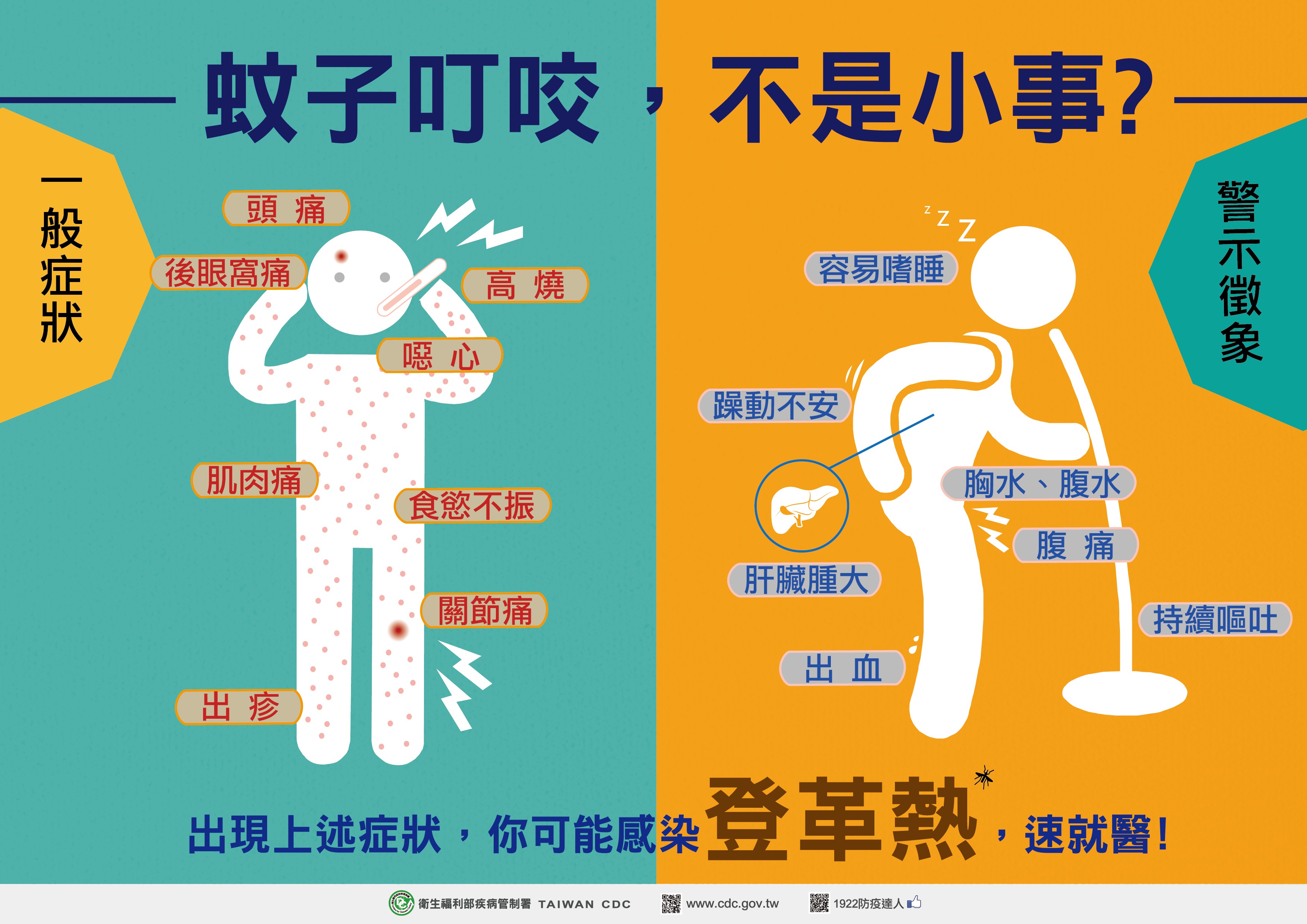
資料來源:疾管署
Phone: 03-4227151#57270、03-2804814
Fax: 03-4272405
Email: ncu7270@ncu.edu.tw
Address: No. 300, Zhongda Rd., Zhongli District, Taoyuan City 320317, Taiwan (R.O.C.)
Views: 0
Copyright © Health Care Division, National Central University
National Central University - Health Center