
Menu
Others
Issue 508 – Responding to World Heart Day: Take Action with "Heart" to Change Habits
According to the World Health Organization (WHO), around 18 million people die each year from cardiovascular diseases (CVD), accounting for about 32% of global deaths. On World Heart Day, September 29, with the theme "Use Heart for Action," the focus is on raising awareness about heart health.
The Silent Risk of the 'Three Highs': Early Detection and Prevention of Cardiovascular Diseases
According to the 2023 statistics on the top causes of death in Taiwan, heart disease and cerebrovascular disease rank 2nd and 4th, respectively, with hypertension and diabetes contributing to over 56,000 deaths annually. This number continues to rise. The root causes of cardiovascular disease are the "three highs" (high blood pressure, high blood sugar, and high cholesterol). High blood pressure increases the workload on the heart, high blood sugar damages the arterial walls, and high cholesterol leads to artery narrowing and hardening, all of which increase the risk of coronary heart disease, heart attacks, and strokes. The 2018-2022 National Nutrition and Health Change Survey showed that 40-70% of people over the age of 20 with abnormal levels of the "three highs" are unaware, as the early stages of these conditions typically show no obvious symptoms. This often leads to delayed lifestyle changes or treatment, ultimately increasing the risk of developing cardiovascular diseases.
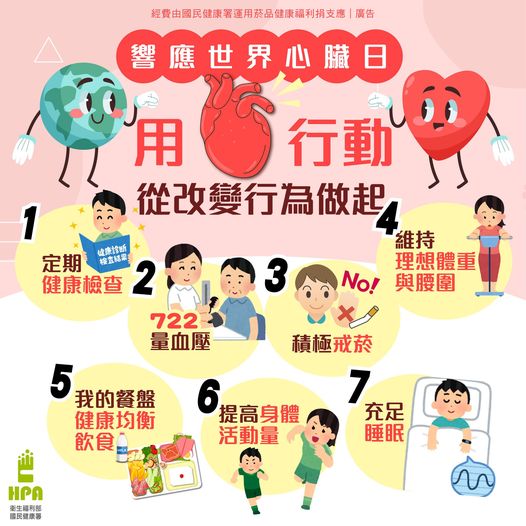
"Use Heart for Action" – Take Charge of Your Heart Health:
- Regular Health Check-ups: Utilize preventive health services, monitor changes in blood pressure, blood sugar, and cholesterol, and follow up on any concerns.
- "722" Blood Pressure Monitoring: Measure blood pressure for seven consecutive days, twice daily (morning and night), and take two readings each time.
- Quit Smoking: Smoking increases "bad" cholesterol, damaging the heart and blood vessels.
- Maintain Ideal Weight: Aim for a body mass index (BMI) between 18.5–24, and manage waist circumference.
- Balanced Diet: Follow "My Plate" guidelines for a healthy, balanced diet.
- Physical Activity: Engage in at least 150 minutes of moderate exercise weekly to reduce CVD risks.
- Adequate Sleep: Ensure 7–9 hours of sleep each night.
For more information, visit National Health Service's Health 99 website.
Source: Taiwan National Health Service
Phone: 03-4227151#57270、03-2804814
Fax: 03-4272405
Email: ncu7270@ncu.edu.tw
Address: No. 300, Zhongda Rd., Zhongli District, Taoyuan City 320317, Taiwan (R.O.C.)
Views: 0
Copyright © Health Care Division, National Central University
National Central University - Health Center