
Menu
Others
NO.423:Miracle Drug or Poison? Understanding Steroids Correctly
Steroids are known for their strong anti-inflammatory effects and have even been called a “miracle drug.” They are widely used to treat allergies, immune-related disorders, and inflammatory diseases. However, long-term or inappropriate use may cause side effects, which has led to public concern. The Taiwan Food and Drug Administration (TFDA) invited pharmacist Su Po-Ming from the Taiwan Pharmacist Association to explain what steroids are and how they should be used safely.
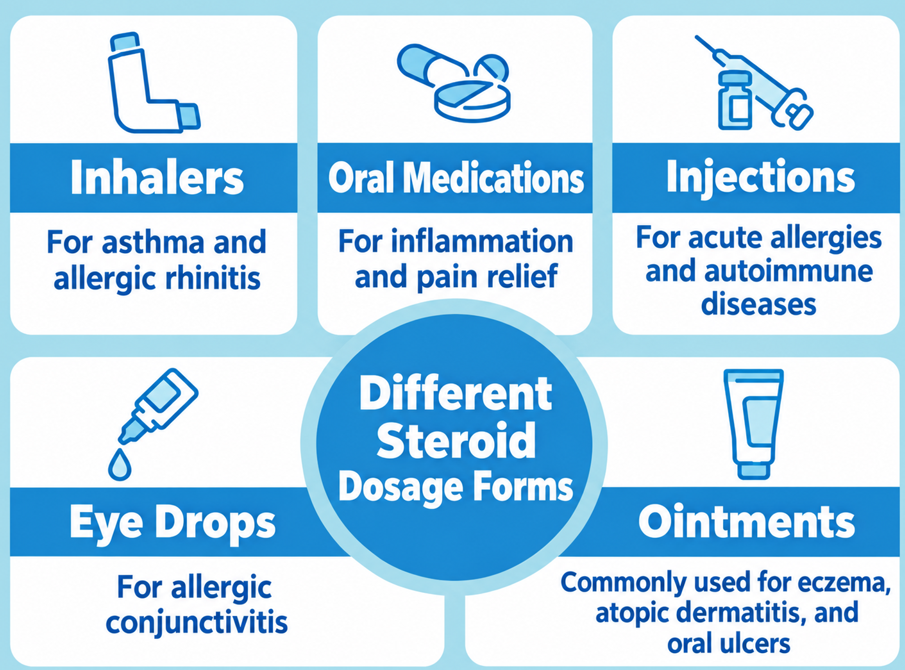
Steroids have been used in clinical medicine for more than 60 years and play an important role in treating many diseases. Pharmacist Su explained that steroids come in many forms, including inhalers, oral medications, injections, eye drops, and topical creams or ointments.
Inhaled steroids are commonly used for asthma and allergic rhinitis. Oral steroids may be prescribed for inflammation and pain. Steroid injections are used in situations such as severe allergic reactions and autoimmune diseases. Steroid eye drops may be used for allergic conjunctivitis, while steroid creams or ointments are commonly prescribed for conditions such as eczema, atopic dermatitis, and oral ulcers.
Do Steroids Cause Side Effects?
Although steroids are widely used, many people worry about possible side effects such as a “buffalo hump,” “moon face,” high blood pressure, high blood sugar, and osteoporosis.
Pharmacist Su noted that the risk of side effects is more likely to increase when steroids are used in high doses for a long period of time. In general, treatment lasting more than three months and involving relatively high daily doses may increase the risk. The actual risk depends on the type of steroid, dosage, duration of treatment, and the patient’s individual condition.
For example, when prednisolone is used at more than 1 mg per kilogram of body weight per day, it is generally considered a high dose.
How Can Steroids Be Used Safely?
In clinical practice, some conditions may require a relatively high steroid dose for a short period. For example, a physician may prescribe several steroid tablets per day for one week to treat sudden sensorineural hearing loss. Although the dose may seem high, the short treatment duration means that patients generally do not need to be overly concerned about long-term side effects.
Similarly, inhaled steroids used for childhood asthma contain relatively small amounts of medication. When used as prescribed, long-term treatment does not necessarily lead to the same systemic side effects associated with high-dose oral steroids. Patients should rinse their mouth after using an inhaled steroid to reduce the risk of local side effects such as oral infections.
There are also several common misunderstandings about steroid use. Some people believe that applying a thick layer of steroid cream will make it work better, but this is incorrect. Usually, only a thin layer is needed—just enough so that the medication is absorbed and no thick white residue remains on the skin.
Others worry that long-term steroid treatment will cause dependence and mean they must take the medication for life. In fact, doctors usually adjust the dosage according to the patient’s condition and may gradually reduce or discontinue the medication when appropriate.
The key is to use steroids exactly as prescribed and not stop or adjust the dose on your own. When used properly under medical supervision, steroids can be an effective and important treatment.
Source: Taiwan Food and Drug Administration (TFDA)https://www.fda.gov.tw/tc/PublishOtherEpaperContent.aspx?id=1565&tid=5190&r=115496563
Phone: 03-4227151#57270、03-2804814
Fax: 03-4272405
Email: ncu7270@ncu.edu.tw
Address: No. 300, Zhongda Rd., Zhongli District, Taoyuan City 320317, Taiwan (R.O.C.)
Views: 0
Copyright © Health Care Division, National Central University
National Central University - Health Center